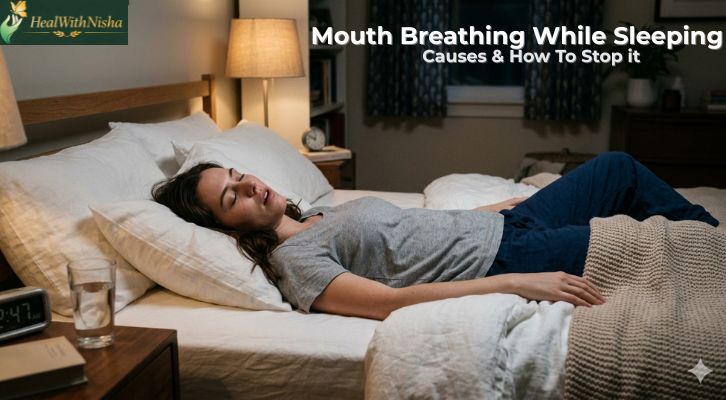
If you wake up a lot with a mouth or your throat hurts or you feel really tired even though you slept all night eg through your mouth xwhile you sleep. Mouth breathing while sleeping is a common problem that a lot of people do not notice. It can affect your health the balance of hormones in your body and how good your life is. Knowing what mouth breathing while sleeping is is the step, to making it better.
👉Watch a Mouth Breathing While Sleeping explanation here:
https://youtube.com/shorts
What Is Mouth Breathing?
Breathing through your mouth all the time while sleeping is a big problem.It is one of the breathing issues that happen during sleep. At healwithnisha we often meet patients who ask: Why do I breathe through my mouth when I sleep? The reason is a combination of issues, structural problems and lifestyle choices.Mouth breathing is a concern. We see patients, with mouth breathing issues regularly.They ask us about mouth breathing and its causes.
Common signs you may be a mouth breather at night include:
- Waking up with dry mouth after waking up or a parched throat
- Loud snoring or restless sleep
- Daytime fatigue despite sleeping for 7–8 hours
- Mouth breathing and poor sleep quality going hand in hand
- Frequent morning headaches or brain fog
Causes of Mouth Breathing at Night
Understanding the causes of mouth breathing at night is key to finding the right solution. Here are the most common triggers:
1. Nasal Congestion and Allergies
Blocked nasal passages from seasonal allergies, sinusitis, or a cold force the body to switch to mouth breathing. Chronic nasal congestion is one of the top causes of mouth breathing at night, often going undiagnosed for years.
2. Structural Airway Issues
A deviated septum, nasal polyps, or enlarged adenoids restrict nasal airflow and are major structural causes of mouth breathing. These may contribute to long-term sleep breathing problems.
3. Sleep Apnea
Obstructive sleep apnea (OSA) is closely linked to mouth breathing. When the airway collapses during sleep, the body opens the mouth to get more air a sign of serious sleep breathing problems requiring medical attention.
4. Habitual Breathing and Poor Posture
Sometimes mouth breathing is simply a habit, especially from childhood. Sleeping on your back also causes the jaw to fall open. Side sleeping is one of the most effective natural ways to stop mouth breathing.
At a glance key causes of mouth breathing at night:
- Nasal congestion due to allergies or sinusitis
- Deviated septum or nasal polyps
- Obstructive sleep apnea
- Habitual mouth breathing since childhood
- Back sleeping posture that drops the jaw open
Health Effects of Mouth Breathing
The health effects of mouth breathing go far beyond an inconvenient dry mouth after waking up. Prolonged mouth breathing affects multiple body systems:
Mouth Breathing: Daily Plan
| Habit | What to Do | Why It Helps |
|---|---|---|
| Morning | Practice nasal breathing | Trains your body to breathe through nose |
| Evening | Use steam or saline spray | Clears nasal blockage |
| Before Bed | Do deep breathing exercises | Improves airflow & relaxation |
| Sleep Position | Sleep on your side | Keeps mouth closed naturally |
| Night Care | Use humidifier | Prevents dry mouth |
Dry Mouth and Dental Health
Sleeping with your mouth open dries out saliva, increasing the risk of tooth decay, gum disease, and bad breath. Persistent dry mouth after waking up is a direct sign of nighttime mouth breathing.
Mouth Breathing and Poor Sleep Quality
There is a direct link between mouth breathing and poor sleep quality. Mouth breathers spend less time in deep, restorative sleep stages and are more prone to morning fatigue, headaches, and irritability.
Nose Breathing vs Mouth Breathing
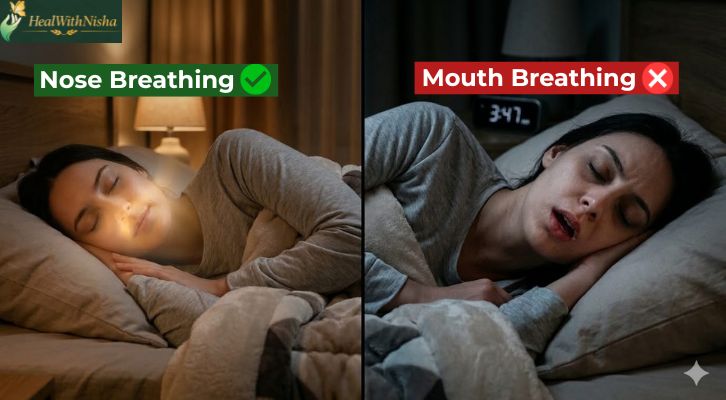
When comparing nose breathing vs mouth breathing, nasal breathing clearly wins. Nasal breathing filters, humidifies, and warms air, and produces nitric oxide that improves oxygen absorption. Mouth breathing bypasses all these benefits.
- Nose breathing: filters allergens, regulates airflow, boosts oxygen uptake
- Mouth breathing: delivers raw, dry, unfiltered air to the lungs
- Chronic mouth breathing raises the risk of respiratory infections
Impact on Thyroid, PCOD VS PCOS, and Weight Loss
Poor sleep from mouth breathing and poor sleep quality disrupts cortisol, insulin, and reproductive hormones. At healwithnisha, many patients managing PCOD VS PCOS and Thyroid imbalances also report sleep breathing problems these are often connected. Disrupted sleep also raises the hunger hormone ghrelin, making weight loss significantly harder.
How to Stop Mouth Breathing During Sleep
There are several proven natural ways to stop mouth breathing and restore healthy nasal breathing:
Breathing Exercises
Daily breathing exercises retrain the body to breathe through the nose. Try these natural ways to stop mouth breathing:
- Buteyko breathing technique to slow and reduce breath volume
- Alternate nostril breathing Nadi Shodhana before bedtime
- Diaphragmatic belly breathing to improve nasal airflow
Nasal Hygiene and Bedroom Environment
Use a saline nasal rinse or neti pot before bed. A bedroom humidifier also reduces dry mouth after waking up by keeping air moist.
Sleep Position and Mouth Taping
Switch to side sleeping to keep the jaw closed. Medical-grade mouth tape used under guidance encourages nose breathing vs mouth breathing during sleep. Always consult a doctor if you have sleep apnea before trying mouth taping.
Address Underlying Conditions
Treat root causes: allergies, a deviated septum, Thyroid-related swelling, or PCOD VS PCOS. Managing these conditions is essential to resolving sleep breathing problems and supporting weight loss.
Myofunctional Therapy
Targeted exercises for the tongue, lips, and jaw retrain correct muscle function. Myofunctional therapy is a powerful long-term solution for how to stop mouth breathing during sleep.
Quick-start checklist for stopping mouth breathing:
- Practice nasal breathing exercises daily
- Use saline spray before bed
- Sleep on your side, not your back
- Consult a doctor if snoring or sleep apnea is suspected
- Track Thyroid and PCOD VS PCOS health with professional guidance
- Avoid alcohol and heavy meals close to bedtime, as they relax the airway and worsen mouth breathing
- Maintain a healthy weight excess weight around the neck increases the risk of sleep breathing problems
When to See a Doctor
Seek professional evaluation if you experience persistent dry mouth after waking up, loud snoring, gasping at night, or chronic fatigue despite trying natural ways to stop mouth breathing. Those managing Thyroid disorders, PCOD VS PCOS, or weight loss challenges should discuss sleep breathing problems with their doctor.
A Note on Breathing and Holistic Health from healwithnisha
At healwithnisha, we take a root-cause approach. Whether you are managing weight loss, PCOD VS PCOS, or Thyroid fluctuations, the quality of your breathing and sleep is foundational. Better breathing is not just about sleep it is about restoring your body's natural balance.
Conclusion
Mouth breathing when you are sleeping is something that can be treated. It can cause a lot of problems. You might wake up with a mouth. You might not sleep well. Mouth breathing can also mess with your hormones. Make you gain weight. You can do things to stop mouth breathing while you sleep. You can try ways or change your lifestyle. If you have something like Thyroid or PCOD or PCOS you should get that treated too. If you do something about mouth breathing today it can really change how you sleep and how you feel. Mouth breathing is a deal and taking care of it can make a big difference, in your life.
(FAQs)
1. Is mouth breathing while sleeping dangerous?
Frequent mouth breathing while sleeping can contribute to sleep breathing problems, dental issues, and poor sleep quality if it continues for long periods.
2. What are the main causes of mouth breathing at night?
The most common causes of mouth breathing at night include nasal congestion, allergies, structural airway issues, poor sleep posture, and long-term breathing habits.
3. What are natural ways to stop mouth breathing?
Some effective natural ways to stop mouth breathing include breathing exercises, side sleeping, maintaining nasal hygiene, and improving sleep routines.
4. Why do I have dry mouth after waking up?
Persistent dry mouth after waking up is often caused by mouth breathing while sleeping, which dries out saliva during the night.
5. Can mouth breathing affect hormones?
Yes. Mouth breathing and poor sleep quality may disrupt hormone balance, potentially affecting conditions like Thyroid disorders and PCOD VS PCOS.
Medical Disclaimer
The information in this article is for educational purposes only and should not replace professional medical advice. Always consult a qualified healthcare professional for diagnosis or treatment of sleep breathing problems, Thyroid conditions, PCOD VS PCOS, or other health concerns.